
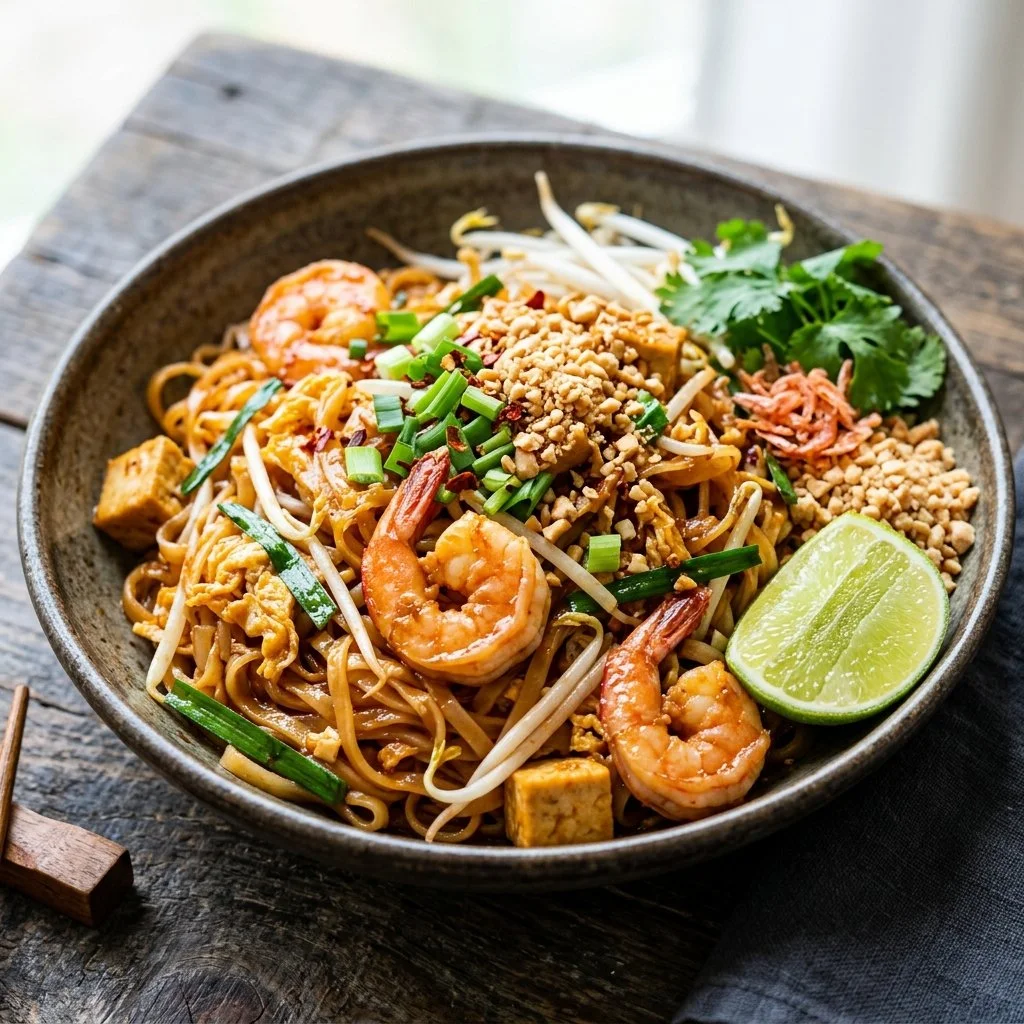
There’s something magical about the first time you try authentic Pad Thai. The delightful balance of flavors combined with the satisfying textures takes you on a mini culinary adventure, invoking memories of bustling street markets, tantalizing aromas wafting through the air, and the sweet tang of lime that brightens even the dullest of days. For me, the first time I tasted Pad Thai was like opening a treasure chest of flavor. I can clearly remember the vibrant colors of the dish, the way the steam curled up and enveloped me like a warm hug, and the taste that whisked me straight to Thailand. After countless attempts, I’ve perfected my version of this classic comfort food — easy enough for any weeknight and yet glamorous enough to impress guests.
Recipe Timing
- Prep Duration: 30 minutes
- Active Cooking: 15 minutes
- Total Duration: 45 minutes
- Portion Size: Serves 2-3
- Complexity: Simple
Nutritional Recipe
- Calories per portion: ~400 calories
- Protein: 18g per serving
- Carbs: 50g per serving
- Fats: 15g per serving
- Fiber: 3g per serving
- Sugars: 5g per serving
- Sodium: 900mg per serving
Why You’ll Love This Pad Thai
This Pad Thai recipe is packed with flavor and texture, boasting a medley of fresh ingredients. With crispy tofu, crunchy bean sprouts, and a generous sprinkling of crushed peanuts, every bite is a celebration of deliciousness. Plus, it’s entirely customizable — whether you want to switch the protein, toss in your favorite veggies, or adjust the heat, this recipe caters to everyone. You won’t just love how this dish tastes; you’ll love how it transforms your kitchen into a lively space filled with enticing aromas.
The Complete Cooking Journey
Cooking this Pad Thai is not just about the final dish; it’s about savoring the process. From the anticipation while soaking the rice noodles to the sizzle of tofu in hot oil and the vibrant colors merging in your skillet, every step adds to the experience. This isn’t just dinner; it’s a delicious way to unwind and explore tastes that tell a story of culture and comfort.
Ingredients:
- 8 oz rice noodles
- 2 tablespoons vegetable oil
- 1 cup tofu, cubed
- 2 eggs, beaten
- 3 cloves garlic, minced
- 1 cup bean sprouts
- 1/4 cup peanuts, crushed
- 3 green onions, sliced
- 2 tablespoons fish sauce
- 1 tablespoon tamarind paste
- 1 tablespoon sugar
- 1 lime, cut into wedges
- Fresh cilantro, for garnish
Method:
Step 1: Soak the Noodles
Soak the rice noodles in warm water for about 20-30 minutes, or until soft. Drain and set aside.
Step 2: Brown the Tofu
In a large skillet or wok, heat the vegetable oil over medium heat. Add the cubed tofu and cook until golden brown.
Step 3: Scramble the Eggs
Push the tofu to one side of the skillet and pour the beaten eggs onto the other side; scramble until fully cooked.
Step 4: Sauté the Garlic and Noodles
Add the minced garlic and cooked noodles, stirring to combine.
Step 5: Add the Flavor
Stir in the fish sauce, tamarind paste, and sugar. Toss everything together until the noodles are well coated.
Step 6: Incorporate the Veggies
Add the bean sprouts, peanuts, and green onions. Cook for an additional 2-3 minutes, stirring constantly.
Step 7: Serve with a Twist
Serve hot with lime wedges and garnish with fresh cilantro.
Serving Suggestions & Pairings
Serve this luscious Pad Thai alongside a cool cucumber salad or a bowl of miso soup. For a full feast, consider pairing it with spring rolls for an appetizer, or perhaps a chilled Thai iced tea to wash it down. The sweet and creamy flavors of the tea complement the savory notes of the Pad Thai beautifully.
Storage & Leftovers Guide
If you have leftovers, store them in an airtight container in the fridge for up to 3 days. To reheat, simply warm in a skillet over medium heat, adding a splash of water if needed to prevent sticking. Unfortunately, Pad Thai doesn’t freeze well due to the texture of the noodles.
Kitchen Wisdom & Success Tips
- For extra crunch, add more peanuts or toss in some crushed red pepper flakes for heat.
- Make sure to prep all your ingredients before you start cooking. Stir-frying is quick, so having everything within reach ensures nothing burns.
- If you’re allergic to fish sauce, substitute it with soy sauce or tamari for a vegetarian version.
Flavor Variations & Adaptations
Feeling adventurous? Try adding cooked shrimp or grilled chicken for extra protein. You can also toss in any leftover vegetables you have on hand, like bell peppers, broccoli, or snap peas for added nutrition. Need it vegan? Substitute eggs with scrambled chickpea flour or leave them out entirely.
Reader Questions & Solutions
-
What type of noodles should I use for Pad Thai?
Traditional Pad Thai uses flat rice noodles, often labeled as "Pad Thai noodles." Look for dried rice noodles that are about 1/4 inch wide. -
Can I make Pad Thai without fish sauce?
Absolutely! Use soy sauce, tamari, or a combination of soy and lime juice to give you that salty, tangy flavor. -
How do I prevent my noodles from sticking?
Soak them just until soft and drain them well before adding to the hot skillet. You can also toss them with a bit of oil after soaking to keep them separate. -
What can I use instead of tofu?
You can use chicken, shrimp, or tempeh. Just adjust the cooking time accordingly! -
Can I make this Pad Thai gluten-free?
Yes! Ensure that your noodles are gluten-free and replace the fish sauce with gluten-free soy sauce.
Wrapping Up
Cooking Pad Thai is more than just a recipe; it’s a delicious experience that brings the vibrancy of Thai cuisine right to your kitchen. This dish not only satisfies hunger but also fills your home with warmth and a symphony of flavors. So why not embrace this adventure? Gather your ingredients, rally your loved ones, and let the kitchen come to life with the irresistible aroma of your homemade Pad Thai. Enjoy every delightful bite!